
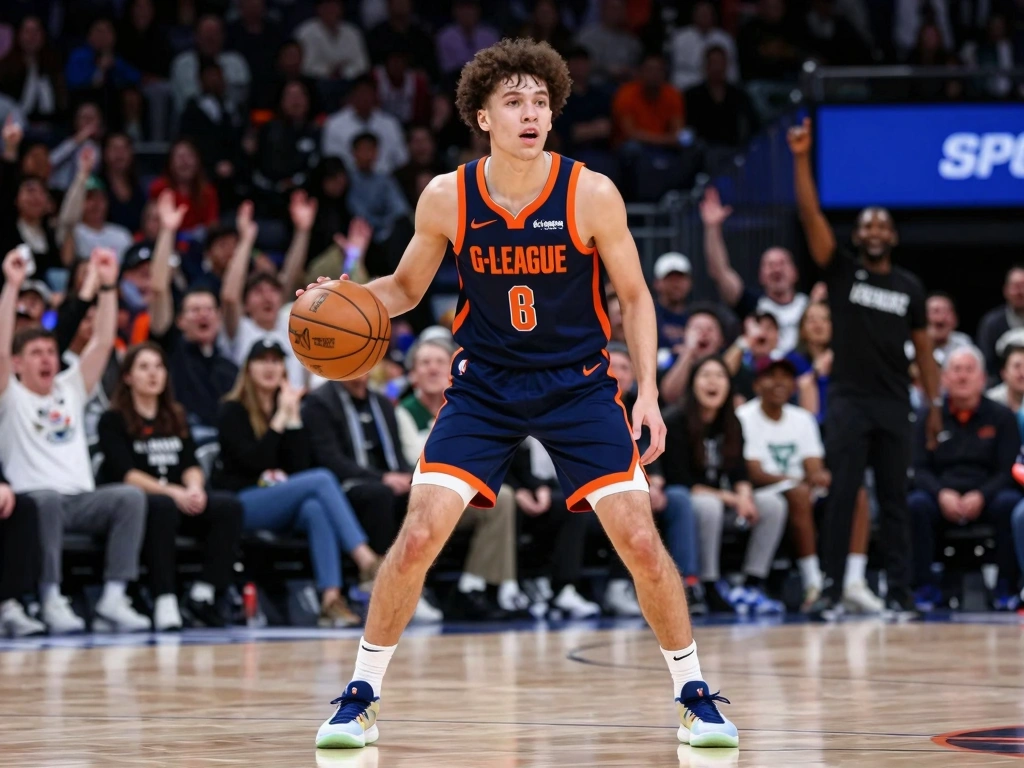
The Role of the NBA G-League in Player Development

The NBA G-League, the official minor league of the National Basketball Association, has emerged as a critical pathway for young players aiming to transition to the professional level. This development league not only provides a platform for honing skills but also plays a significant role in shaping draft prospects' futures. Understanding how G-League contracts influence these prospects requires a closer examination of player development, financial implications, and the overall impact on draft stock.
Training and Skill Enhancement
One of the primary advantages of the G-League is its focus on training and skill enhancement. Players in the G-League receive structured training programs tailored to their specific needs, allowing them to refine their skills in a competitive environment. Unlike college basketball, where players often face a mix of learning and competition, the G-League emphasizes player development through rigorous training sessions.
For instance, prospects like Jalen Green and Jonathan Kuminga chose the G-League Ignite program over traditional college routes. These players benefitted from personalized coaching, advanced training facilities, and the chance to compete against older, more experienced players. This environment accelerates their skill acquisition and prepares them for the rigors of the NBA.
Coaching Quality and Experience
The coaching staff in the G-League often includes former NBA players and experienced coaches who bring a wealth of knowledge to the table. For example, coaches like Brian Shaw and Clyde Drexler have previously leveraged their NBA experience to mentor young talent, providing insights that are invaluable for player growth. The direct access to high-caliber coaching enhances a player's understanding of the game and facilitates their transition to the NBA.
Game Experience vs. College Basketball
While college basketball offers a platform for players to showcase their talents, the G-League provides a more professional atmosphere. Players can engage in a schedule that mimics the NBA, complete with back-to-back games, travel, and the need to adapt quickly. This real-world experience is essential for prospects, as they learn to manage their time and performance under pressure.
Statistics show that G-League players often face a faster pace of play and a higher level of competition than in college. For example, during the 2020-2021 season, the G-League showcased a 14% increase in scoring pace compared to NCAA games. This exposure to NBA-style play can be a significant advantage when prospects enter the draft.
Financial Implications of G-League Contracts
Financial considerations play a substantial role in a player's decision to join the G-League. The contracts offered can significantly influence a prospect's future, both in the short and long term.
Salary Comparisons with NCAA Scholarships
G-League contracts have evolved to offer competitive salaries that are attractive compared to NCAA scholarships. For example, the average salary for G-League players in the 2022 season was approximately $35,000, with some two-way contracts reaching as high as $462,629. In contrast, NCAA basketball players may receive scholarships that cover tuition and living expenses but do not equate to a direct salary.
The financial incentive to pursue a G-League contract becomes even more compelling when considering the potential for endorsement deals. Players in the G-League can sign endorsement contracts, allowing them to monetize their brand while simultaneously developing their basketball skills.
Long-term Financial Stability for Prospects
Choosing a G-League contract can lead to long-term financial stability for draft prospects. By entering the G-League, players can bypass the uncertainty associated with traditional college routes, where injuries or poor performance can hinder their draft prospects. The G-League offers a safety net, allowing players to earn a salary while continuing to develop their skills.
Additionally, players who perform well in the G-League can secure two-way contracts with NBA teams. This arrangement provides a pathway to not only earn a higher salary but also gain benefits such as health insurance and retirement plans, which are not typically available to college athletes.
Influence of Endorsements and Sponsorships
The G-League has become increasingly attractive to brands and sponsors looking to capitalize on the growing popularity of basketball. Young players can leverage their performance in the league to attract endorsements, which can significantly enhance their financial prospects. For instance, players like LiAngelo Ball and Jalen Green have successfully secured endorsement deals that augment their earnings beyond their salaries, highlighting the importance of marketability in the G-League.
Draft Stock Impact Due to G-League Exposure
The exposure that players receive in the G-League has a direct correlation with their draft stock. As NBA teams look for talent, the performance metrics and visibility gained in the G-League can make or break a player's draft prospects.
Visibility to NBA Scouting Networks
The G-League provides a platform where players can demonstrate their skills in front of NBA scouts. Games are often attended by scouts from various teams, creating a direct line of visibility for prospects. This exposure is critical, as NBA teams increasingly rely on data analytics and live scouting reports to assess player potential.
For example, during the 2021 draft, several players who had significant G-League experience saw their stock rise substantially. Davion Mitchell, who played for the G-League Ignite, was selected 9th overall, showcasing how G-League performances can influence draft decisions.
Performance Metrics and Analytics
In the modern NBA landscape, performance metrics and analytics play a pivotal role in evaluating prospects. G-League teams utilize advanced analytics to track player performance, providing a wealth of data that NBA teams can analyze during the draft process. Metrics such as Player Efficiency Rating (PER) and True Shooting Percentage (TS%) are crucial in assessing a player's impact on the court.
For instance, Tyrese Haliburton’s performance metrics in the G-League helped him secure a place in the 2020 NBA Draft, where he was chosen 12th overall. His strong shooting percentages and assist-to-turnover ratio highlighted his readiness for the professional game, further proving that G-League statistics can significantly influence draft evaluations.
Case Studies of Successful G-League Players
Several players have successfully transitioned from the G-League to the NBA, serving as notable case studies for the influence of G-League contracts on draft prospects. Jordan Poole, who played for the G-League team before being drafted by the Golden State Warriors, exemplifies this trajectory. His G-League experience allowed him to develop his scoring ability, ultimately leading to a successful NBA career.
Another example is Gary Payton II, who utilized the G-League as a stepping stone to find his place in the NBA. After showcasing his skills in the G-League, he was signed by the Golden State Warriors, where he became an integral part of their roster. These success stories underscore the G-League's potential to shape players' futures positively.
Recruitment Strategies for NBA Teams
As the G-League continues to grow, NBA teams are adapting their recruitment strategies to include G-League talent. Understanding how to effectively identify and integrate these players into their rosters is crucial for team success.
Targeting G-League Talent
NBA teams are increasingly focusing on G-League players when it comes to scouting for new talent. The G-League's competitive environment allows scouts to evaluate players in real-time, making it a vital resource for talent acquisition. Teams are investing resources into understanding which players have the potential to make an impact at the NBA level.
For example, teams like the Los Angeles Lakers and Brooklyn Nets have been known to target G-League talent, successfully integrating players like Alex Caruso and David Nwaba into their lineups. This trend reflects a broader strategy of acquiring players who have already demonstrated their abilities in a professional setting.
Integration into NBA Lineups
Integrating G-League players into NBA lineups presents both challenges and opportunities. Teams must consider how to effectively utilize these players while also ensuring they adapt to the speed and intensity of the NBA. Coaches often take a hands-on approach, providing tailored training and mentorship to ease the transition.
For instance, players like Chris Clemons, who went from the G-League to the Houston Rockets, have benefited from structured integration processes. Coaches focus on developing their strengths while addressing areas that require improvement, ensuring that G-League graduates can contribute meaningfully to their new teams.
Comparative Analysis with International Prospects
The G-League is often compared with international leagues in terms of player development and recruitment strategies. While international prospects bring diverse playing styles and experiences, the G-League offers a more familiar environment for NBA teams, as it directly mirrors the NBA's structure.
This familiarity can often lead to quicker adaptations for players transitioning from the G-League to the NBA. However, international prospects, such as Luka Dončić, have also proven that success in overseas leagues can translate to the NBA. The decision between selecting a G-League player or an international prospect often hinges on the immediate needs of the team and the specific skills of the player.
Future Trends in G-League Contract Structures
The evolving landscape of the NBA G-League is likely to influence future contract structures and the overall role of the G-League in the NBA Draft process.
Potential Changes in Contract Lengths
As the G-League continues to grow in importance, teams may begin to explore varying contract lengths. Shorter contracts could provide players with more opportunities to showcase their skills while allowing teams to maintain flexibility in their rosters. Conversely, longer contracts may offer stability for players, ensuring they have enough time to develop before potentially entering the NBA.
Impact of Two-Way Contracts on Draft Decisions
Two-way contracts have become an essential element of G-League player development. These contracts allow players to split time between the G-League and NBA, providing them a unique opportunity to gain experience at both levels. As teams increasingly rely on this model, it may influence draft decisions, with teams more likely to select players who have proven themselves in the G-League.
For example, the success of players on two-way contracts, such as Juan Toscano-Anderson, highlights how this model can create pathways for players to secure permanent NBA spots. As more teams adopt this approach, we may see a shift in how draft prospects assess their options.
Predictions for G-League’s Role in NBA Drafts
Looking forward, the G-League is poised to play an even more significant role in shaping NBA drafts. As the league continues to attract top talent and investment, its influence on player development will only grow. Teams are likely to prioritize players with G-League experience, recognizing the benefits of having prospects who have already faced the challenges of a professional environment.
In conclusion, the NBA G-League offers a robust framework for player development that significantly influences draft prospects' futures. From training and financial implications to the impact on draft stock, G-League contracts shape the trajectory of young athletes aspiring to reach the NBA. As the landscape of professional basketball continues to evolve, the G-League will undoubtedly remain a pivotal component in the journey from prospect to professional.